
VISION QC AI / FUTURE DEVELOPMENT
CONCEPT · IN DEVELOPMENTThe next step in garment inspection.
We are developing an automated line to connect controlled image capture, garment handling and Vision QC AI review in one traceable quality process.
Explore the concept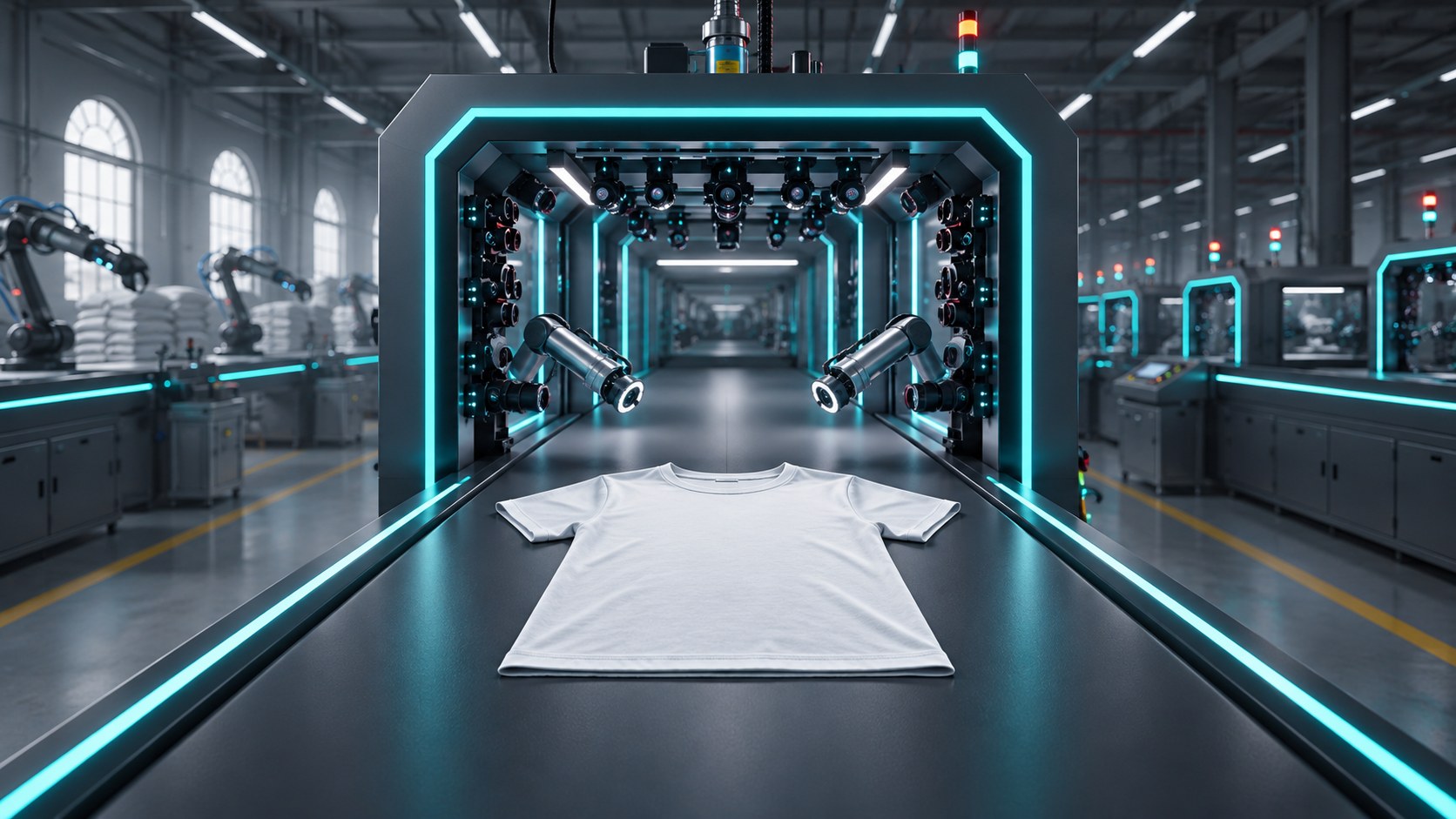 ILLUSTRATIVE CONCEPT RENDER
THE ENGINEERING DIRECTION
Capture. Turn. Compare.
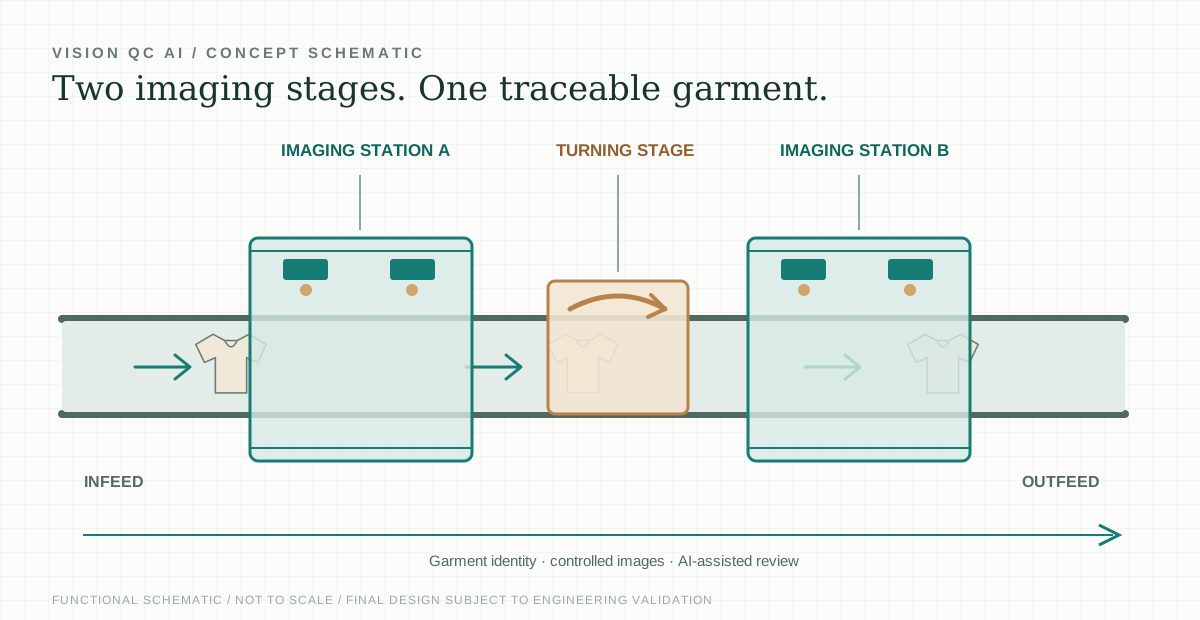
The concept joins two imaging stations with a garment-turning stage. The machine would pass evidence into the software for review and reporting; the brand would keep its quality decision.
Identify the garment
Associate an individual garment with its style, lot and inspection session.
Capture controlled views
Use cameras and lighting to create repeatable visual evidence.
Review both sides
A handling stage exposes the second side before a further image pass.
Report differences
Vision QC AI flags findings for qualified human review and follow-up.
SECOND PERSPECTIVE
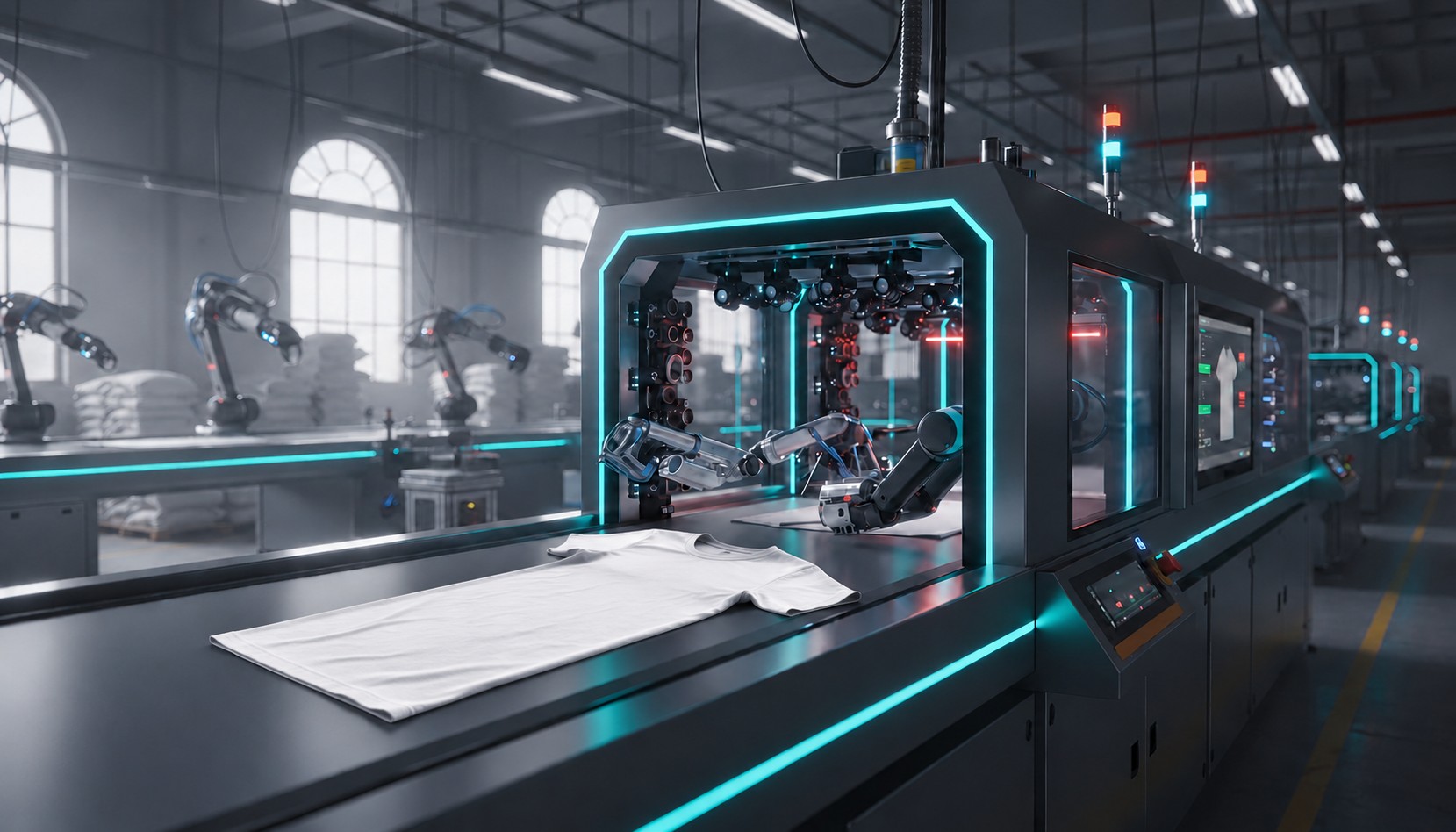
The line from the side.
The earlier concept image shows the machine enclosure, imaging area and conveyor from another angle. Together with the frontal view above, it helps explain the intended layout.
CONCEPT DRAWING
A line designed around the garment.
Derived from the project drawing, this functional schematic shows two imaging areas and an intermediate turning stage. Final geometry, handling and safety design remain subject to engineering and trials.
VISUAL CONCEPT
See the direction in motion.
This short visualisation illustrates the ambition for an automated garment inspection line. It does not show a completed or tested machine.
Concept film · 5 seconds · no audio
Illustrative AI-generated concept video. Equipment layout and motion are subject to engineering validation.
STUDIED ECONOMIC SCENARIO
A meaningful potential gain at scale.
The project study models a line processing 6,000 T-shirts per day over 250 working days. It compares annual inspection operating costs before equipment purchase and installation.
Annual operating cost in the study
Annual operating cost in the study
Per year before machine purchase and installation
Study basis: 6,000 T-shirts/day, 250 operating days/year and a $120 daily labour rate. The proposed coverage is 75,000 garments/year at 5% versus 1,500,000 at 100%. These are modelled development targets; throughput, downtime, cost and inspection performance must be measured on a working line.
DEVELOP THE FUTURE
Let's examine your production case.
Discuss product types, volume, quality standards and a suitable validation plan.